
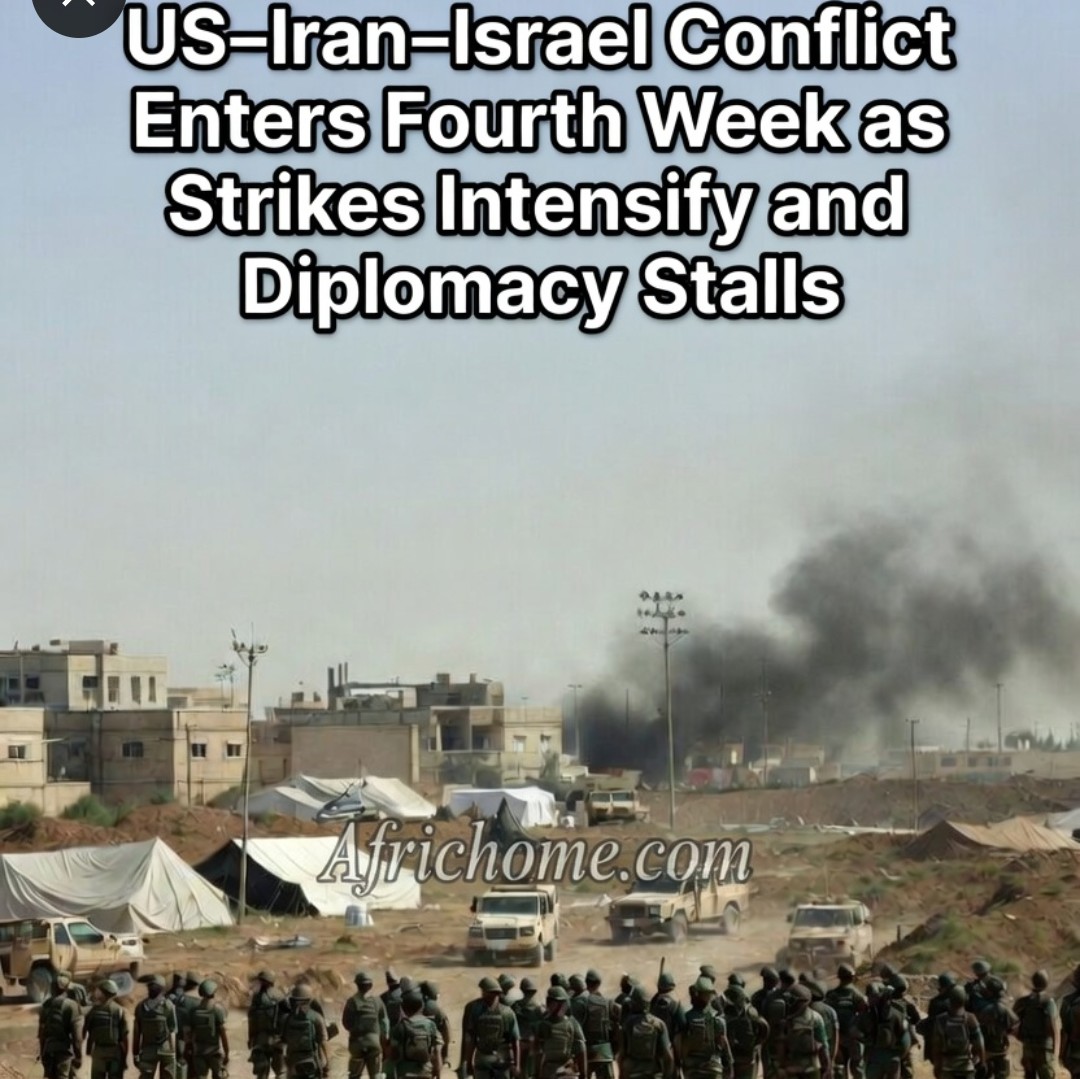
The conflict involving the United States, Iran, and Israel has entered its fourth week, with no clear signs of resolution as missile exchanges, airstrikes, and regional spillover continue to escalate across the Middle East.
Diplomacy Stagnates Despite US Claims of Progress
Washington announced a temporary pause on planned strikes against Iran’s energy infrastructure after claiming “productive” indirect communication with Tehran.
The US framed the move as an opportunity for de‑escalation, particularly regarding the reopening of the Strait of Hormuz, a critical global oil route.
Tehran, however, dismissed the claims, insisting no negotiations are underway and accusing Washington of attempting to influence global markets. Iranian officials maintain that any concessions will only follow a halt to US and Israeli military operations.Israel has expressed unease over the pause, warning that Iran’s missile and drone capabilities remain an immediate threat.
Fresh Strikes Hit Israel and Iran.
Iran launched new waves of ballistic missiles and armed drones targeting central and southern Israel.
Several projectiles were intercepted, but others struck residential areas, injuring more than 100 civilians and damaging infrastructure near key strategic sites.
US–Israeli Operations in Iran.
Joint US–Israeli air operations continued across multiple Iranian provinces, striking
- Missile production facilities
- Air defense systems
- Military command sites
- Naval assets near the Strait of Hormuz.
Although energy‑sector strikes were paused, broader military operations remain active.
Regional Spillover Expands
Iran‑aligned groups in Iraq carried out additional attacks on locations linked to US forces. Gulf states remain on high alert as Iran warns it may target regional energy facilities if itfw iss own infrastructure is hit again.Shipping disruptions persist in the Strait of Hormuz, with commercial vessels navigating under heightened security amid ongoing threats.
Humanitarian and Economic Impact
Civilian casualties continue to rise in both Iran and Israel.
- -Damage to Iranian infrastructure has strained power supplies and emergency services.
- Global oil prices remain volatile due to uncertainty around maritime security.
- Thousands of families across the region face displacement, limited access to utilities, and growing shortages of essential goods.–
Strategic Outlook
The conflict remains dominated by air and missile warfare, with no ground invasion underway. The United States aims to weaken Iran’s military capabilities and secure maritime routes, while Israel focuses on neutralizing long‑term threats from Iran’s missile and nuclear programs.
Despite brief diplomatic signals, the situation remains highly unstable. Any breakdown in indirect communication—or a major strike on energy infrastructure—could trigger a broader regional escalation.


